business@coastlinetek.com

DDR5 Registered Clock
Driver (RCD) Family

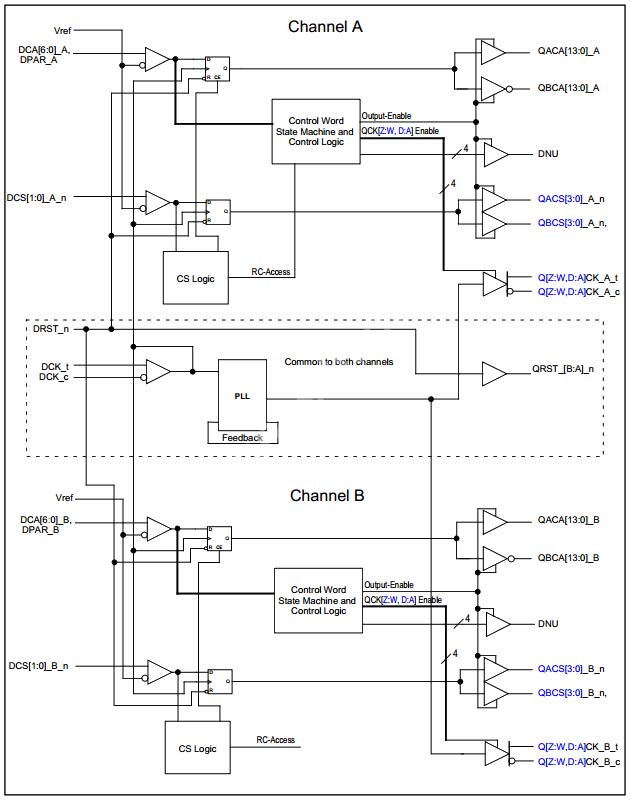
The Coastline DDR5 Registered Clock Driver (RCD) family provides buffered command/address, chip-select, and clock distribution for high-performance server memory modules. Designed for DDR5 RDIMM and LRDIMM implementations, the family helps connect the host memory controller to DRAM devices while supporting dual-channel memory organization, clock generation, signal timing control, and memory-interface training.

The family includes devices compliant with JEDEC DDR5 RCD03 and RCD05 specifications. Depending on the selected device, the platform can support data rates from 5600 MT/s through 8000 MT/s. RCD03 adds BCOM control for LRDIMM data buffers, while RCD05 extends operation to 8000 MT/s and is backward compatible with earlier DDR5 RCD generations.

Key Features

  • DDR5 data rates: product options support 5600, 6400, and up to 8000 MT/s.
  • Buffered signal distribution: buffers command/address (CA), chip-select (CS), and clock signals between the host controller and DRAMs.
  • Dual-channel architecture: supports two independent channels or sub-channels with shared clocking and separate DRAM clock outputs.
  • RDIMM and LRDIMM designs: supports registered memory modules; RCD03 provides a BCOM bus for LRDIMM data-buffer control.
  • Signal timing flexibility: includes output delay controls, inversion and mirroring, and latency equalization, with capabilities varying by device.
  • Training support: supports CA, CS, and DFE training and memory-interface training functions, with device-specific options.
  • Power management: supports self-refresh and power-down modes; specific modes vary by device.
  • JEDEC-based compatibility: RCD03 and RCD05 comply with JESD82-513 and JESD82-515, respectively.
Functional block diagram of the Coastline DDR5 registered clock driver
Functional Block Diagram

Applications

DDR5 RDIMM Server Memory

The RCD family is designed for registered DDR5 DIMMs used in enterprise and cloud servers. Its buffered CA, CS, and clock paths support signal distribution between the memory controller and DRAM devices, while dual-channel operation accommodates common DDR5 module architectures.

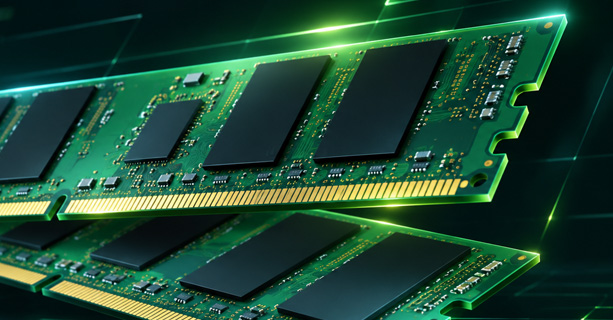
Server memory installed in a data-center compute platform

DDR5 LRDIMM Memory Modules

For LRDIMM designs, RCD03 provides BCOM signals for controlling the module’s data buffers. This supports memory modules that use data buffers as part of their organization. Confirm the selected RCD and module architecture during platform design.

DDR5 LRDIMM memory modules with buffered data paths

Enterprise and Cloud Platforms

The family targets DDR5 memory subsystems in enterprise servers and cloud platforms. Multiple data-rate options allow designers to select a device aligned with the required memory speed, platform design, and qualification goals.

Enterprise and cloud platforms with DDR5 memory subsystems

High-Performance Computing

RCD devices can be used in server memory subsystems for compute-intensive workloads that depend on high memory bandwidth. Integrated clocking, signal timing controls, and supported training functions provide configuration capabilities for module and platform bring-up.

High-performance computing systems with high memory bandwidth

Data-Center Infrastructure

The family can be incorporated into server memory modules deployed in data-center infrastructure, including systems with dense memory configurations. Module capacity, achievable data rate, and system-level performance depend on the complete DIMM and platform design.

Data-center infrastructure with dense server memory configurations